It is important that one distinguishes between the Humanities and the humanities when providing a definition for this term. The improper term ‘humanity’ refers to several distinct things. The Humanities refer to the disciplines that are concerned with humanity directly. To distinguish between the disciplines that are concerned with humanity in an indirect fashion, these non-Humanities disciplines are less concerned with the people than the abstract idea of people. The Humanities tend to deal more with the human experience as well as the factors impacting it, whereas social sciences or non-humanities have less interest in the actual phenomenological experience of the human.
To further expand on the improper humanity, it still refers to the human population, but also more than this. In spite of the name ‘humanity,’ this term avoids anthropocentrism by representing features of rational creatures. This is a Kantian concept that follows that duties are non-optional for rational beings in order to support a following argument about the universality and non-optionality of moral considerations. However, by using this, it also ensures that all rational beings fall under ‘humanity’ and would thus have their individual experiences accounted for all the same by the Humanities. Within the ‘Mind’ unit of semester 1, Dr. Sample addressed the decreasing area that divides the homo sapien from the mechanical. From the invention of the ‘Mechanical Turk’ chess fraud, to the conception of the ‘Eliza’ chatbot, up until the era of generative artificial intelligence, the progression of the mechanical nonhuman person requires that the definition of humanity remain inclusive. Furthermore, Dr. Robb’s lecture on the present of human augmentation, or ‘cyborgs,’ pointed towards inventions like the pacemaker and prostheses in order to show how closely related the human is to the machine.
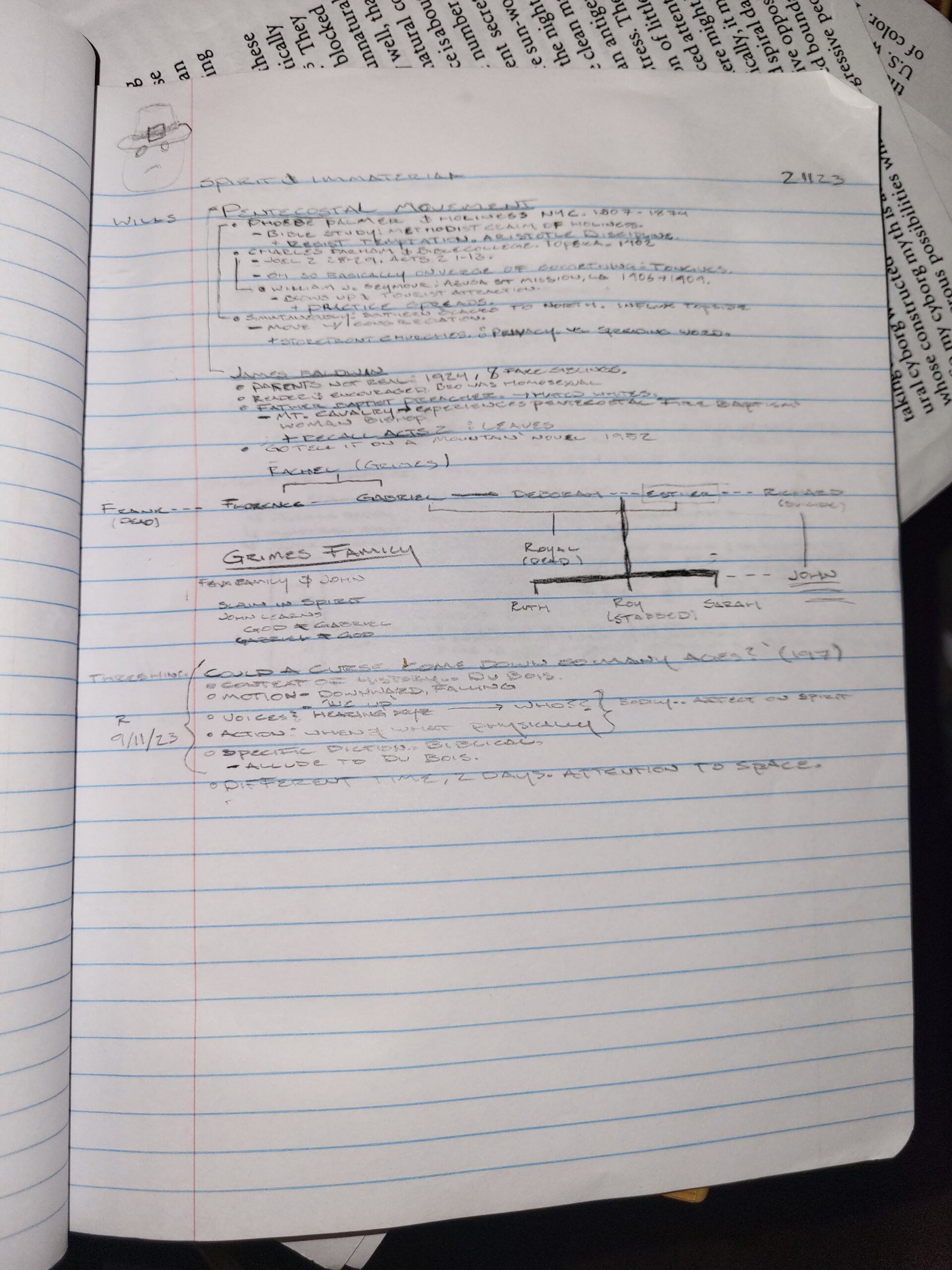
As a collection of disciplines, the Humanities examine beyond humans and extend to all rational beings. The dynamics and politics within humanity, along with its interactions with the external environment and technology form connections and conflicts manifest a culture within the creation of artefacts, such as music, art, and literature. Studying these artefacts, along with their developmental process and context allows one to understand how these factors accumulated to form these artefacts. Consequently, one gains insight into a specific experience of humanity that is historically situated. Dr. Pyle demonstrated this in exploring musicians like Charles Mingus and their songs, which were deeply contextualised by social tensions of that specific time period in America. Not only does one gain a deeper understanding of these social tensions by analysing Mingus’s lyrics, but the social tensions also mutually composed the lyrics in a way. James Baldwin’s Go Tell it on the Mountain was prefaced by Dr. Wills’s lecture on how Baldwin’s personal life was interlaced with the Pentecostal Movement, ance which was itself imbricated in the history of Black Americans. Baldwin intertwines this history with his writing, and analysis of this text also serves as analysis of humanity at this time period. In this way, the ‘spirit’ of humanity is captured within these artefacts.
The Humanities as a collection can also be analysed as the subject of study. Given that the proper Humanities analyse the methods and changes within the experience of humanity, studying how the changes in humanity themselves change would be revealed from this. The separate study of how disciplines interlock and mesh allow for a better understanding of the past, present, and future experiences of humanity relate. For example, in imagining a new future from a distinctly erased past, as explored by Mark Dery in his paper “Black to the Future”. In the first semester, this was also evident in Dr. Boyer’s lecture on the graphic novel WE3, which shares roots concerning the ‘animal fable’ format as an intersection of European and African cultures. This text is also framed by Spain’s role as a route for cultural diaspora, and the author ties all of this together in order to examine the future liminal relationship between nonhuman animal, person, and machine. Similarly, in the plenary discussing Donna Haraway’s “Cyborg Manifesto,” the technologies, politics, and social movements were examined in how they developed from the past. A singular discipline falling underneath the Humanities would study this text and how these factors contributed to it, but under the wholesale lens of the Humanities, the connections shared by these works reveal a deeper context that also reflects the changing conditions of the ‘human experience’.
This understanding of the Humanities as unique from the social sciences and abstraction also solves an epistemological problem for the Humanities. If the Humanities are designed in order to analyse the subject matter of the ‘human experience,’ then it follows that these disciplines are concerned with the phenomenological experience of beings with humanity. A discipline that is categorised as a ‘social science,’ as an example, could not concern either of these things. This is because the subject matter exists as an abstract object (the ‘human experience’) which can be studied through directly analysing beings that one could reasonably assume undergo this experience, a relationship not unlike the synthetic-a priori methodology Kant introduced in his quest to systematise the subject matter of mathematics. The ‘human experience’ cannot be derived from the abstraction of humanity. The reasoning for this is that the study of a human abstracted gives no insight into the phenomenological experiences of an individual, while also excluding the possibility of nonhuman persons/rational beings.
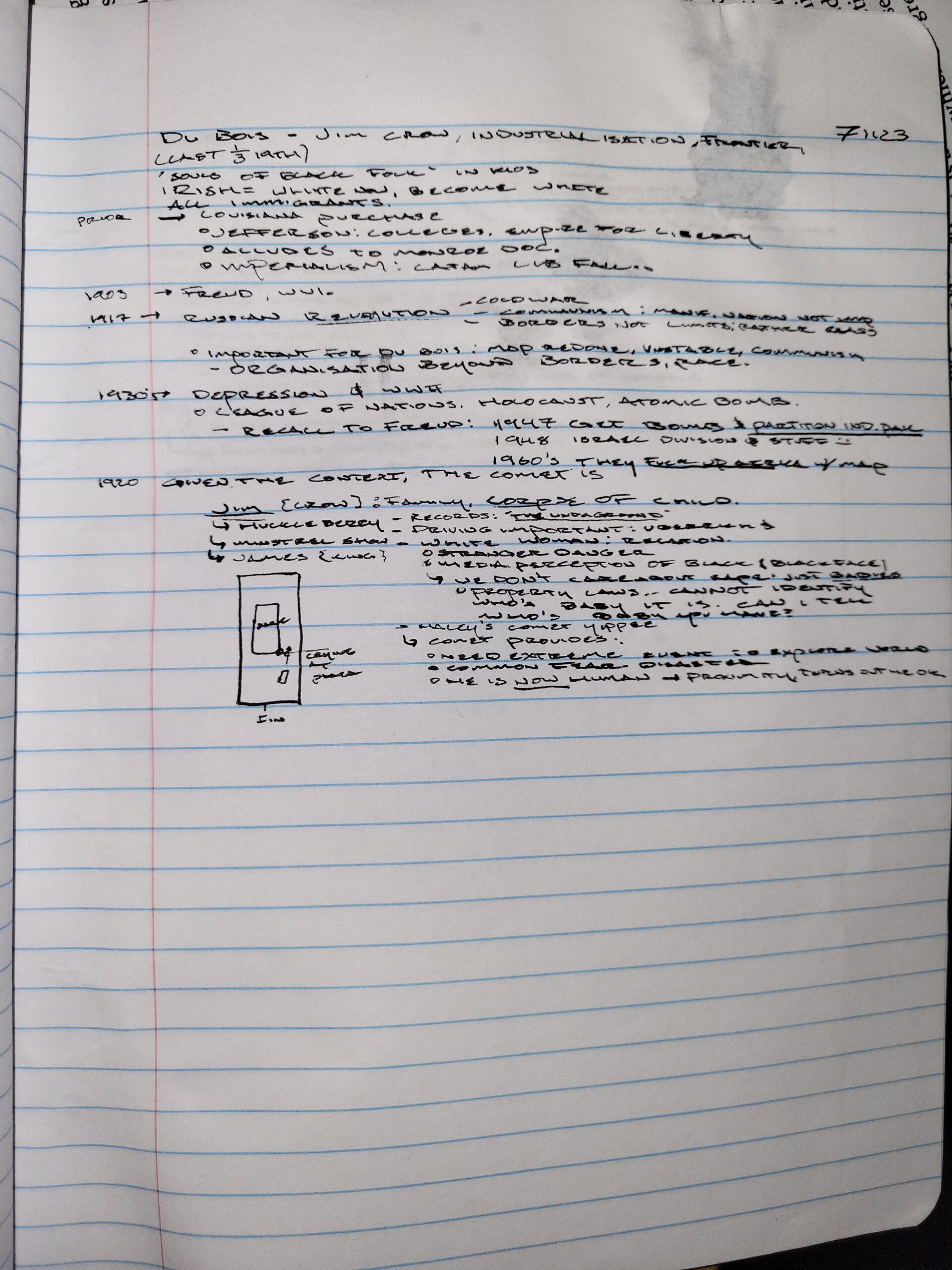
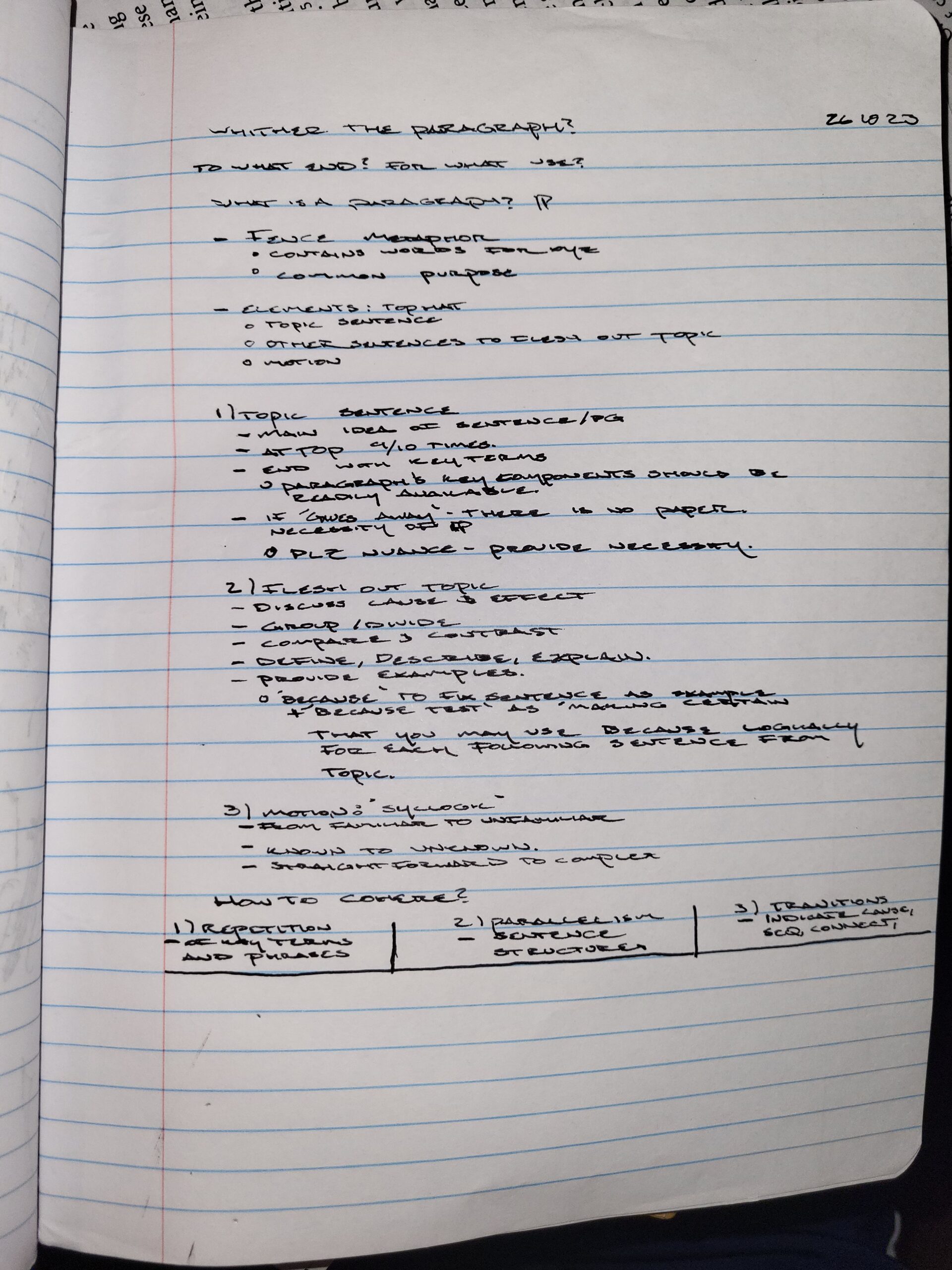
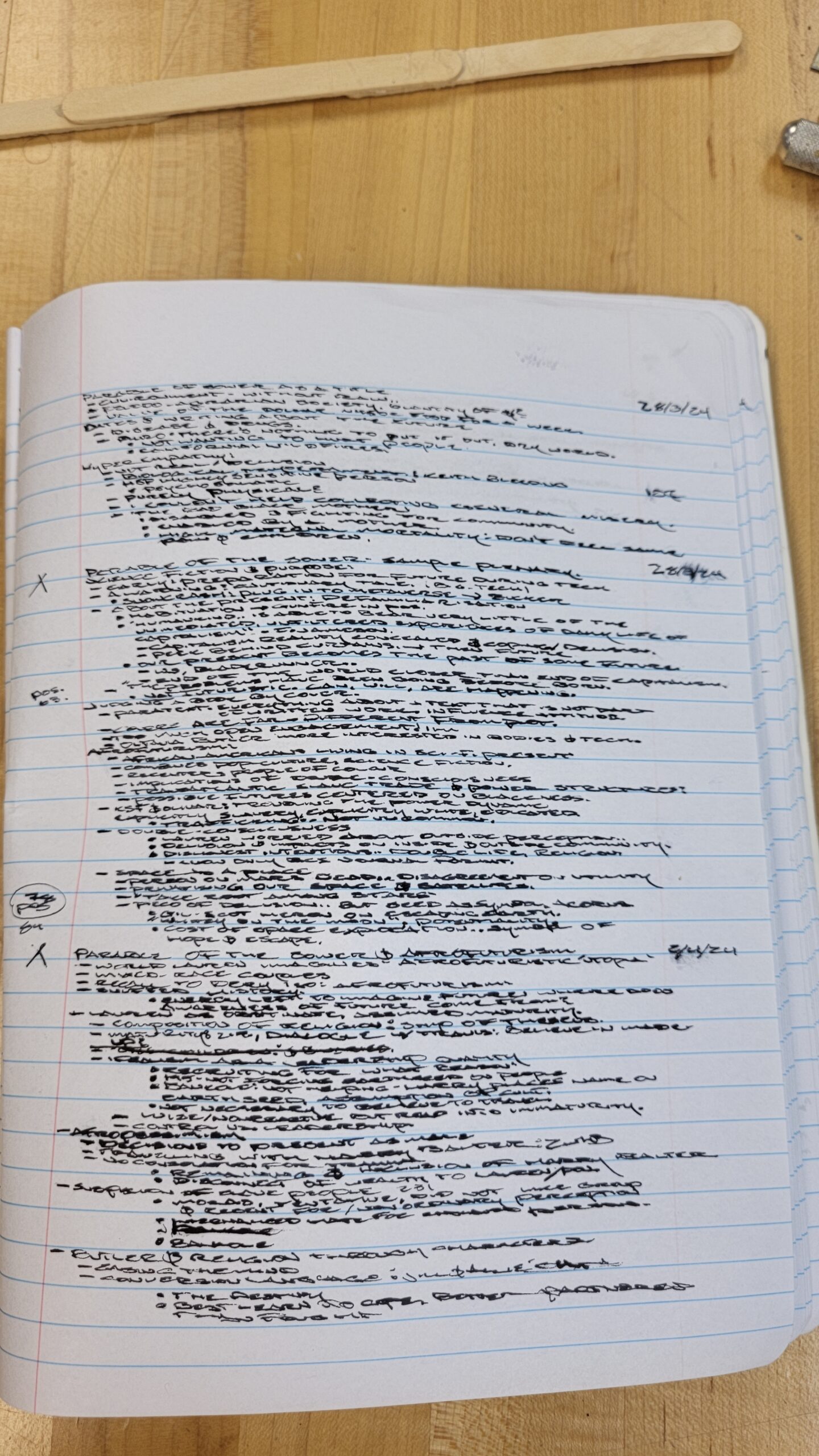
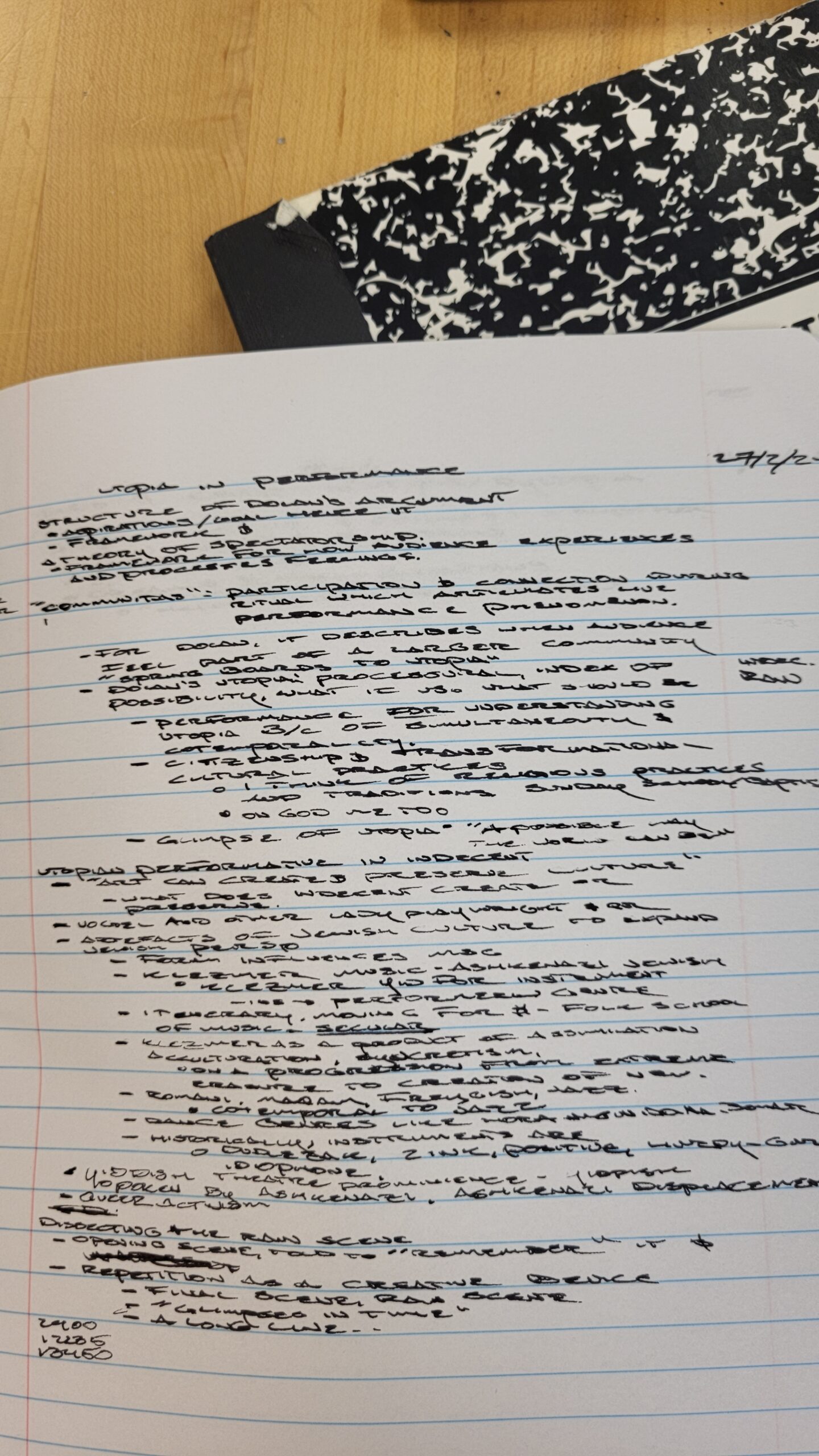
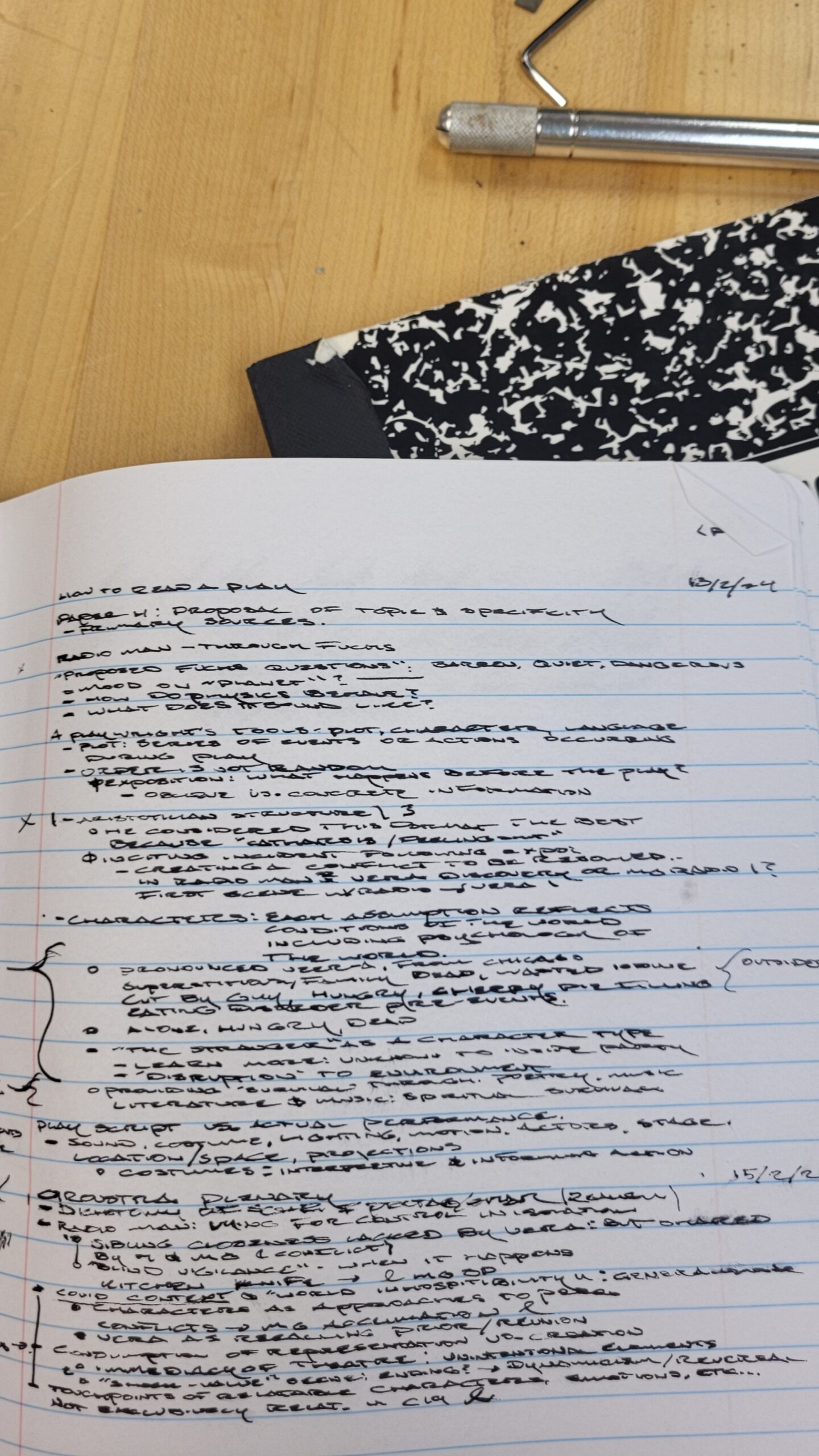
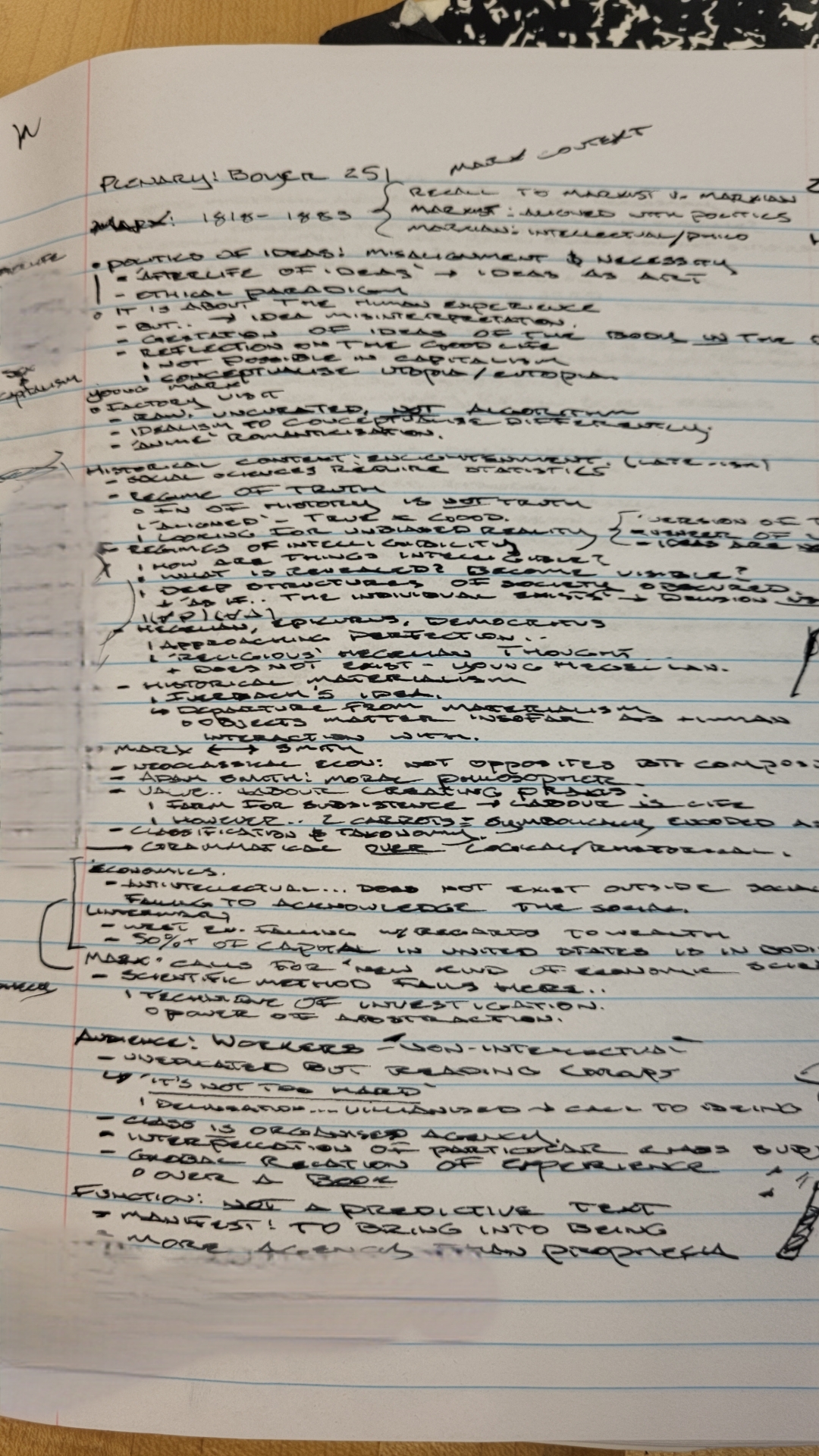
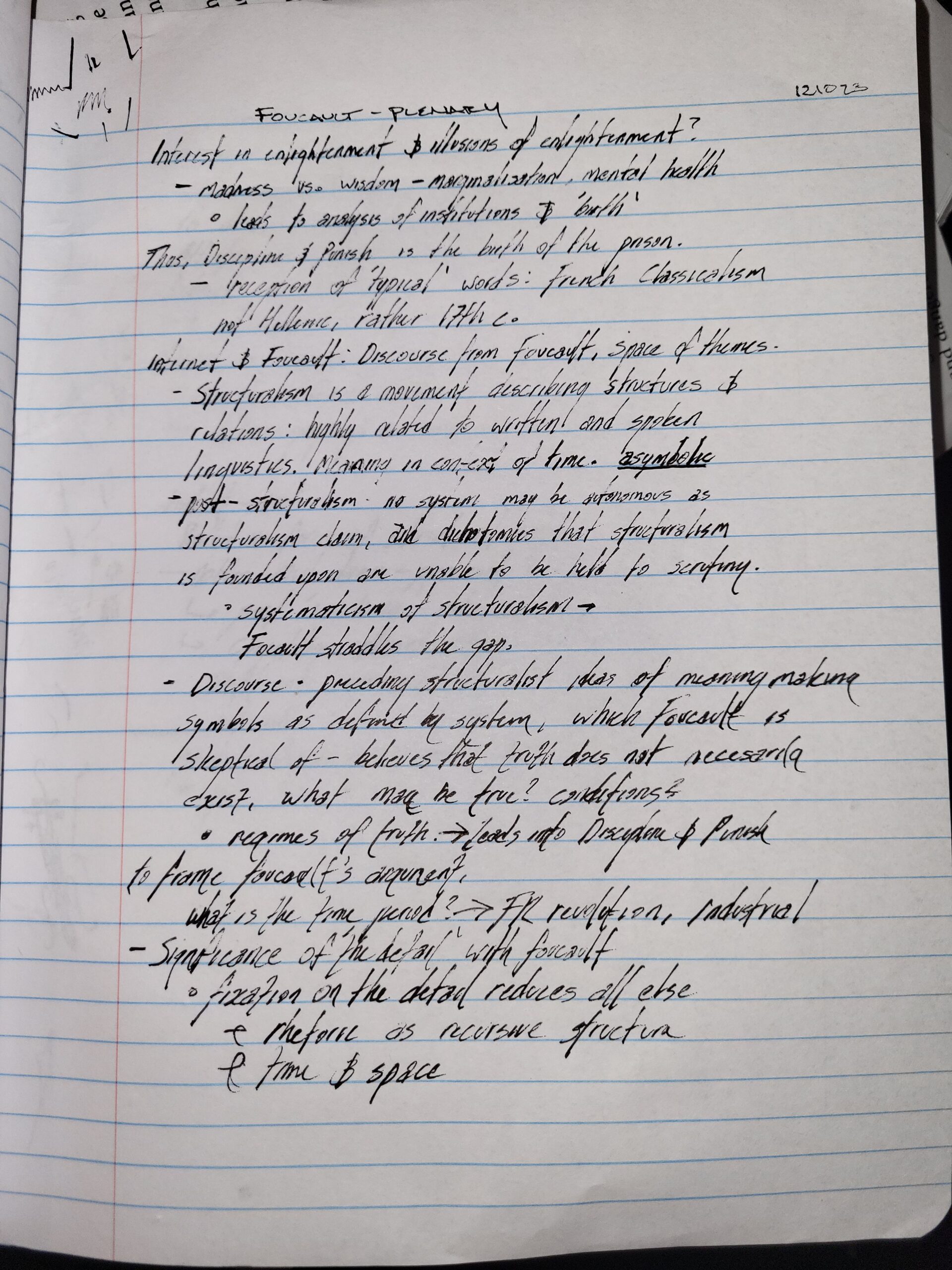
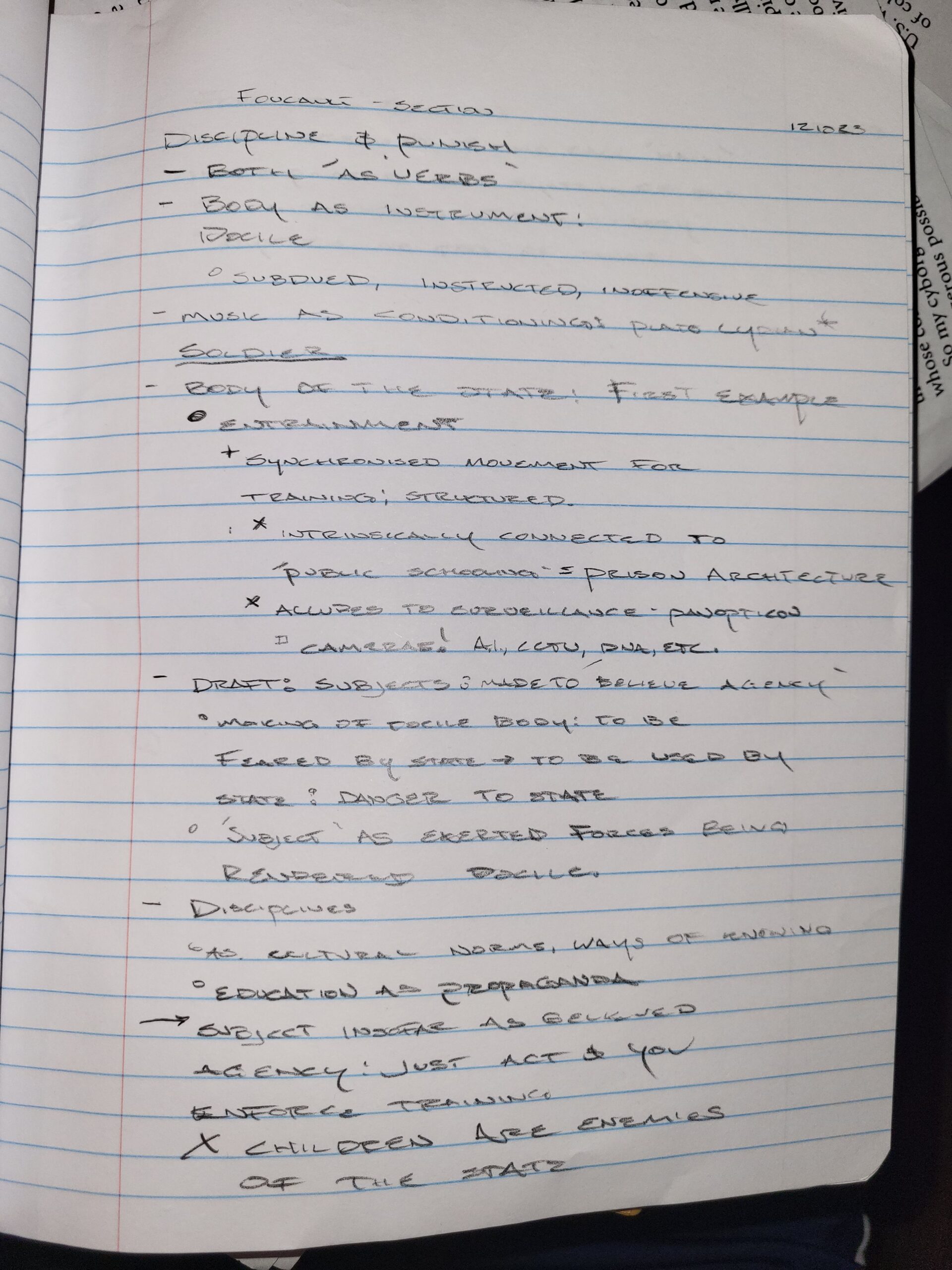
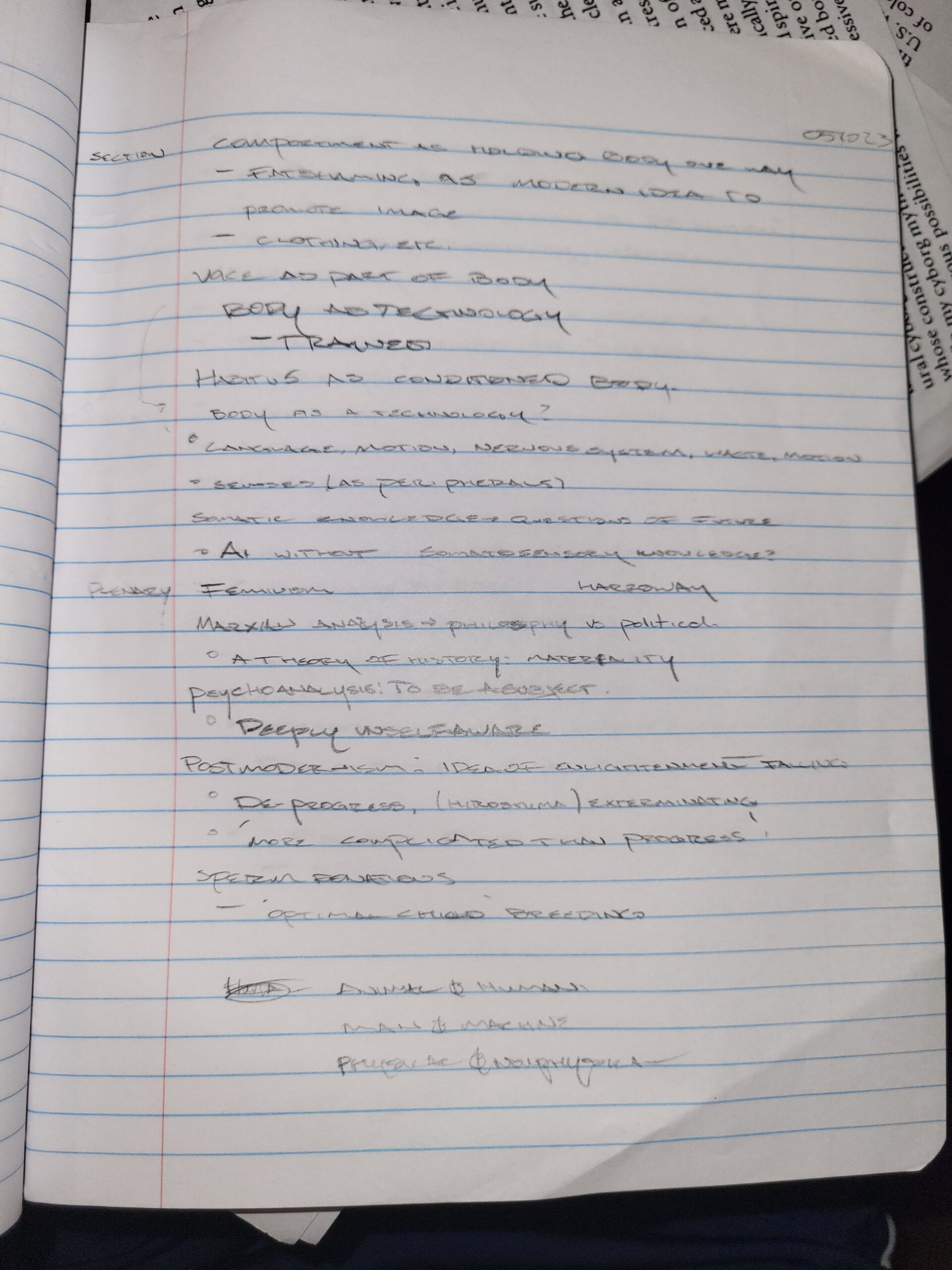
Below are some of my notes from the first semester. Several are used above and I will indicate that.
Plenaries Cited:
Bory, Alison. “Plenary: 05 October, 2023”. HUM103, Davidson College.
Boyer, Patricio. “Plenary: 28 September, 2023”. HUM103, Davidson College.
Robb, David. “Plenary: 07 September, 2023”. HUM103, Davidson College.
Sample, Mark. “Plenary: 07 September, 2023”. HUM103, Davidson College
Pyle, Marcus. “Plenary: 07 November, 2023”. HUM103, Davidson College
Wills, Anne. “Plenary: 02 November, 2023”. HUM103, Davidson College
